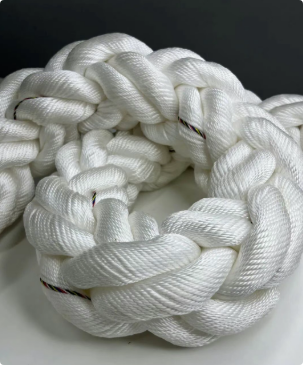
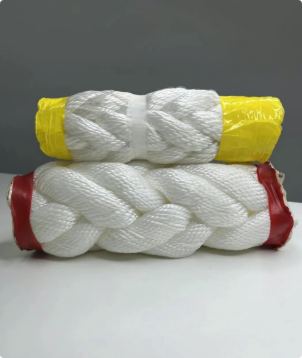
Do you know about mooring ropes?Mooring ropes are multi-stranded ropes used to moor ships, possessing properties such as tensile strength, impact resistance, abrasion resistance, flexibility, and lightness. Marine mooring ropes can be categorized according to shipboard practices as: cables, ropes, and cords; according to their purpose as: static ropes and dynamic ropes; according to their twisting method as: twisted ropes, braided ropes, braided ropes, and composite cables; and according to their material, they can be broadly classified as: plant fiber ropes, chemical fiber ropes, and steel wire ropes.
Classification of marine cables(a) Classification by shipboard practice: Cables, Ropes, and Cables.Cables: Main line, towline
Ropes: Laying rope, flag line, sounding line
Cables: Sling, jack rope, davit rope
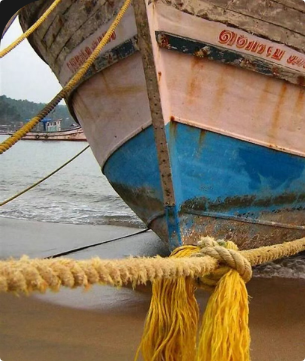 (b) According to their different uses, they can be divided into two main categories: static cables and dynamic cables.
Static cables: Ropes used for fixing and securing, such as the support cables for stabilizing masts and chimneys.
Dynamic cables: Ropes used in frequent movement, such as mooring cables and hoisting slings.
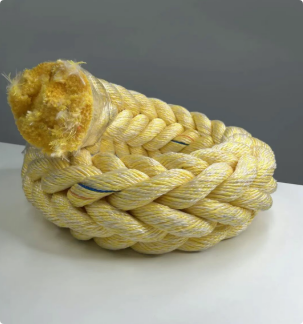
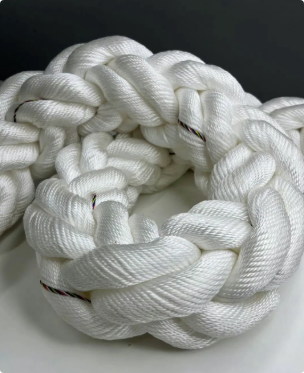 (c) According to the method of twisting, it can be divided into: twisted rope, braided rope, braided rope, and composite cable.
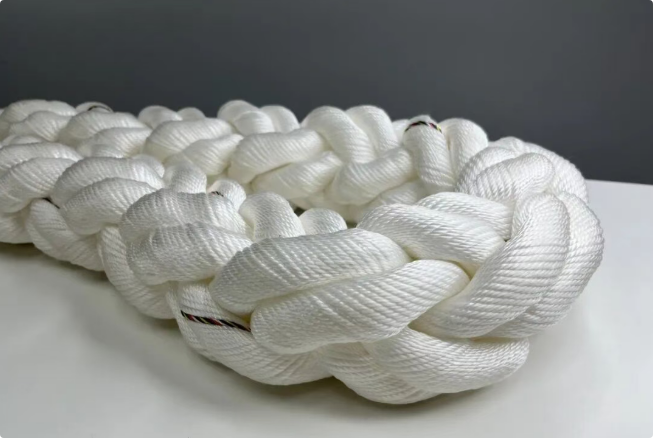 (d) Classification by Material
1. Plant Fiber Rope
Soft and lightweight; easy to use and transport; but relatively weak.
2. Chemical Fiber Rope
Soft, durable, unaffected by moisture, lightweight, and easy to transport; 1/4 lighter than white hemp rope of the same diameter, but with more than 3 times the tensile strength; elongation can reach 20%-40%, but it cannot recover after exceeding 10%; its softness decreases when used in extremely cold regions.
3. Steel Wire Rope
Durable, small in size, stronger than fiber rope of the same diameter, high density, prone to rusting if not properly maintained; the rope is stiff and easily tangled when twisted or deformed by external forces.
How to choose cables
Choosing a cable involves considering many complex factors beyond its twisting method and material. Because of this complexity, a multi-faceted approach is necessary to select the truly suitable cable. In short, before selecting a cable, the following characteristics should be fully understood to ensure a suitable choice:
1. The cable's strength must match the requirements of the application. All cables must undergo strength testing.
2. The cable's specific gravity should be considered, meaning its density relative to water, determining whether it floats or sinks, or whether a custom design is needed.
3. The cable's stiffness should be considered. When considering the cable's elongation performance, ensure the selected product is suitable for the application.
4. The cable's tightness, structure, and abrasion resistance should be fully considered.