Draft is a linear value representing the amount of water a ship sinks or is submerged in. When we say a ship's draft is 10 meters, we essentially mean the depth to which the hull is submerged, or the vertical distance or height from the bottom plating to the waterline.
This is different from depth, which is the total vertical height of the hull. The difference between depth and draft is essentially a linear vertical measurement of the hull above the waterline, known as the ship's freeboard.
Draft is important in several ways; primarily, it is directly related to the crucial physical parameter displacement, which is simply the equivalent weight of the ship in the water, or the volume of water displaced by the hull, and in terms of mass, equal to the buoyancy provided by the hull. This buoyancy allows the ship to float under given conditions.
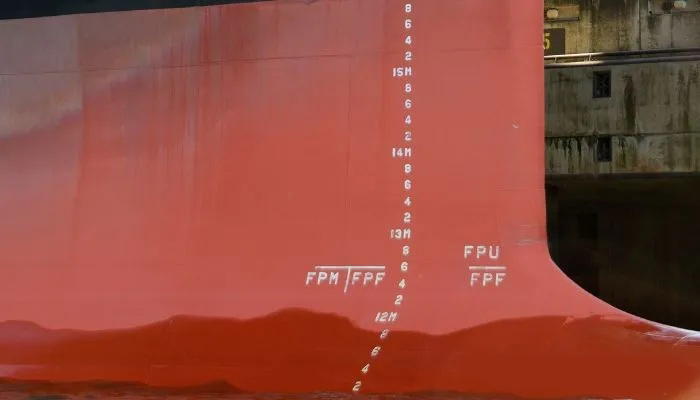
Because draft provides a linear value for the degree to which a hull is submerged, it can be directly used as an estimate of displacement. Furthermore, it helps designers understand the extent of submersion of the hull while afloat, and it clearly shows the clearance or vertical distance from the waterline to the main deck level.
For a given hull depth, the higher the draft, the smaller the safe clearance before the freeboard or submerged main deck or exposed deck.
Most large ocean-going cargo ships have a high draft because they carry cargo fully loaded, and even after unloading and ballasting, they are designed for greater depth.
In other words, large ships always have a high draft because, according to the primary principles of buoyancy, large ships must meet the increased displacement.
The high draft of these ships offers several advantages in terms of hydrodynamics and stability; on the other hand, smaller ships operating in shallow water conditions such as rivers or lakes have lower drafts.
Many argue that, in the early stages of ship design, length and width are also important, although they are essential and always present in the basic dimensions of any ship, but draft is even more crucial!
When a client specifies a vessel's deadweight or tonnage requirements, the designer determines the feasible displacement and considers length, beam, and draft to optimize the design to the maximum extent possible. Of course, to meet the deadweight requirements, space for cargo, accommodation, services, and other utilities must also be maximized.
Once the length, beam, and draft are aligned with the required displacement, the depth is determined based on the vessel's type and size, as well as other factors such as stability. Therefore, the hull depth can only be finalized after the designer is confident in the vessel's feasible draft.
A history
In the 18th and 19th centuries, most ships were frequently overloaded beyond their design capacity. This increased displacement led to greater submersion and consequently, a lower freeboard.
A freeboard exceeding design specifications increased the risk of flooding and drowning in severe weather or high-wave conditions.
However, by the late 19th century, a coal merchant named Samuel Plimsoll began to advocate for a proper marking system that indicated a ship's draft and freeboard under given conditions.
Thanks to his efforts, the marking system began to be used on British ships, and eventually other countries around the world followed suit. The Primsoll series is named after him. Now, all ships inevitably have a prominent feature on their sides indicating submersion.
Draft marks and Primsol lines
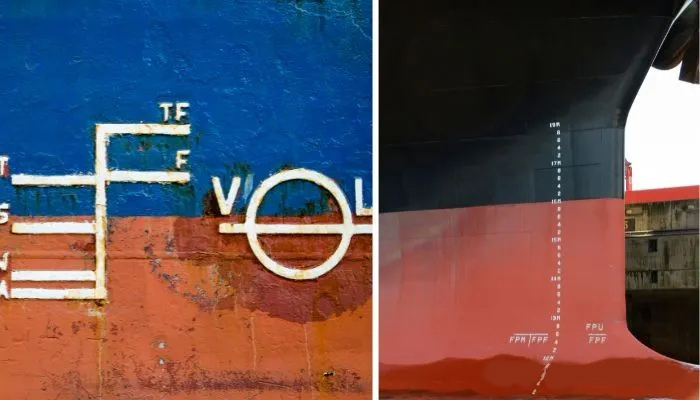
Although the draft markings and the Primsol line differ slightly, they are generally considered to be the same. The sole purpose of this set of markings inscribed on the side of the vessel is to indicate immersion status and freeboard.
During loading and unloading operations of vessels transiting channels or canals, authorized personnel and crew will consult these markings to assess draft and ensure the vessel has sufficient freeboard under given loading conditions.
Features of draft lines
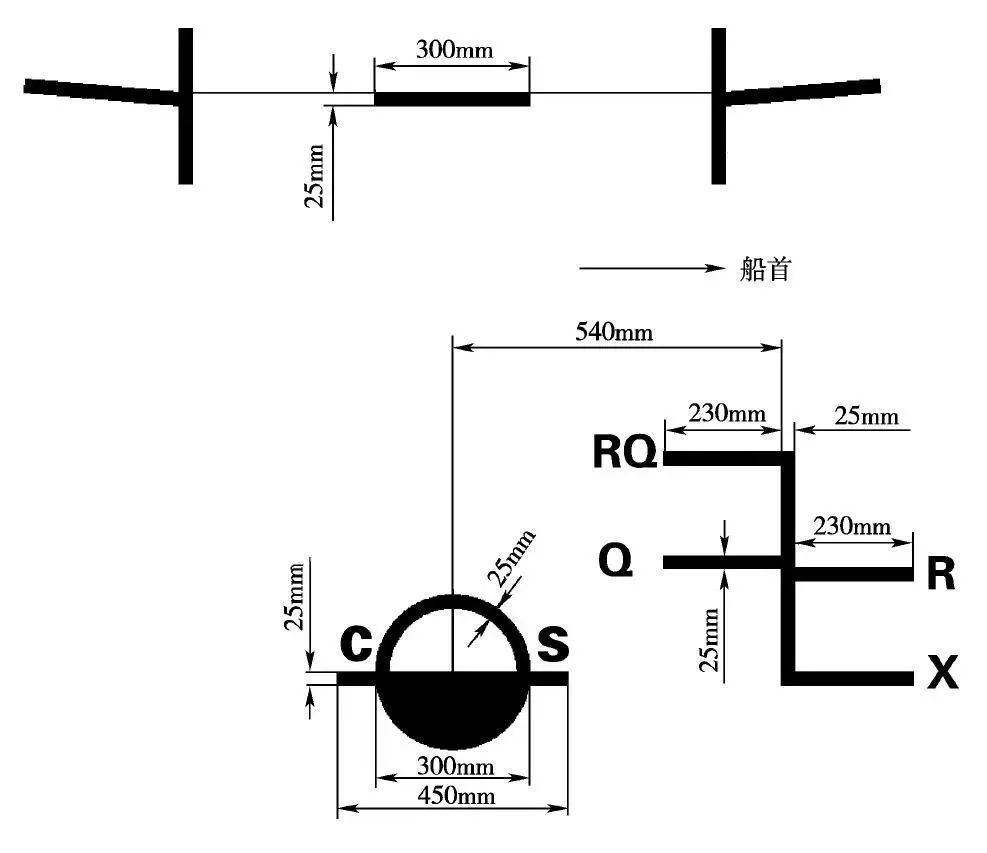
Plimsoll, or Load Line Disc: You may have noticed a disc with a horizontal line running through its centerline and two letters written on either side. This is called a Plimsoll Line Disc or Load Line Disc. The disc is 300 mm in diameter. The letters on either side of the circumference are the initials of the classification society to which the ship was registered from the newbuilding stage. For example, NK indicates NK class, LR indicates Lloyd's Register, etc. The geometric center of the disc coincides with the midships of the ship. Horizontally, the center of the disc coincides with the summer load line.
Load Line: At a horizontal distance of 540 mm from the center of the disc, there is a set of horizontal marking lines extending from either side of a vertical line. These are called load lines. While there are international conventions and classification guidelines for these markings, they can be simply explained as follows:
Summer Load Line: A horizontal line marked with an "S," located approximately in the middle of this arrangement, aligned with the center of the plimsoll disc. When a vessel is in the designated "summer zone," under normal seawater conditions with a density of 1025 kg/m³, the vessel's draft should not exceed this specified level.
Tropical Load Line: Above the summer load line is the line marked T, which applies to the hotter climates of tropical regions.
Winter Load Line: Directly below the summer load line S is the W line, representing the winter load line. We know from the properties of water that it expands and decreases in density as temperature rises. Therefore, from the physics of buoyancy, more or more volume of water needs to be displaced to keep up with a given weight. Thus, in cold regions, even in winter, when water becomes denser and contracts, the draft decreases for a given vessel load.
North Atlantic in Winter: The North Atlantic is the coldest waterway navigable by vessels in winter. Not only is the draft further reduced, but sea conditions also become quite rough. Under these conditions, the safe margin of draft is marked WNA, the lowest line, approximately 50 mm lower than the winter load line. However, according to classification regulations, the WNA mark only exists on vessels shorter than 100m.
Freshwater Load Line: Similarly, we know from the physical and chemical principles of water that saltwater is denser than freshwater. Therefore, for a given vessel and load, a higher volume of water needs to be discharged under freshwater conditions. When a vessel needs to operate in freshwater conditions (such as rivers, canals, lakes, or channels), the draft increases dramatically. The freshwater load line marked F indicates the safe limit of the maximum permissible draft for a vessel under freshwater conditions.
Tropical Freshwater: As mentioned above, draft also increases in hotter regions and climates. This phenomenon, combined with freshwater conditions, further increases the draft, marked as the tropical freshwater line or TF, the highest mark.
Timber Load Line: For vessels carrying timber or wood cargo, a separate set of lines similar to the normal load lines is also marked. This is because timber or wood is a special type of cargo with a lower density for a given volume. Therefore, the buoyancy is greater, and the draft is different. The markings are located on similar lines, but each marking is preceded by the letter T, representing timber.
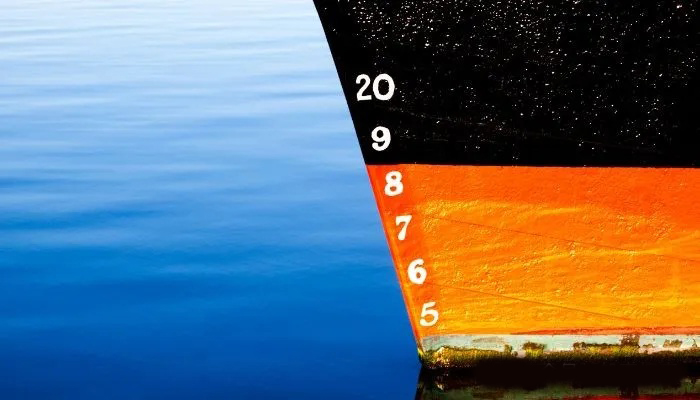
Draft Markers: In addition to these designated lines, calibration figures also individually indicate the exact draft depth. As expected, they are measured from bottom to top as integers in meters or meters (M), separated by a scattering of decimal places in 0.2-meter increments for all practical purposes.
Disclaimer: The data and charts in this article (if used) are derived from available information and have not been certified by any legal authority. No claim is made as to their accuracy, and no liability is assumed. These opinions constitute opinions only and do not constitute any guidance or advice for any course of action that the reader should.