Ocean transport vesselsThe primary task of ocean transport vessels is to transport passengers and cargo, and they can be divided into two main categories: passenger ships and cargo ships.
1. Passenger VesselThis refers to a vessel used to transport passengers and their luggage. Passenger vessels that also carry a small amount of cargo are also called passenger-cargo ships. Because passenger vessels often operate on fixed schedules and routes, they are also called scheduled passenger ships. The International Convention for the Safety of Life at Sea (SOLAS Convention) stipulates that any vessel carrying more than 12 passengers should be considered a passenger vessel.
2. Cargo vessel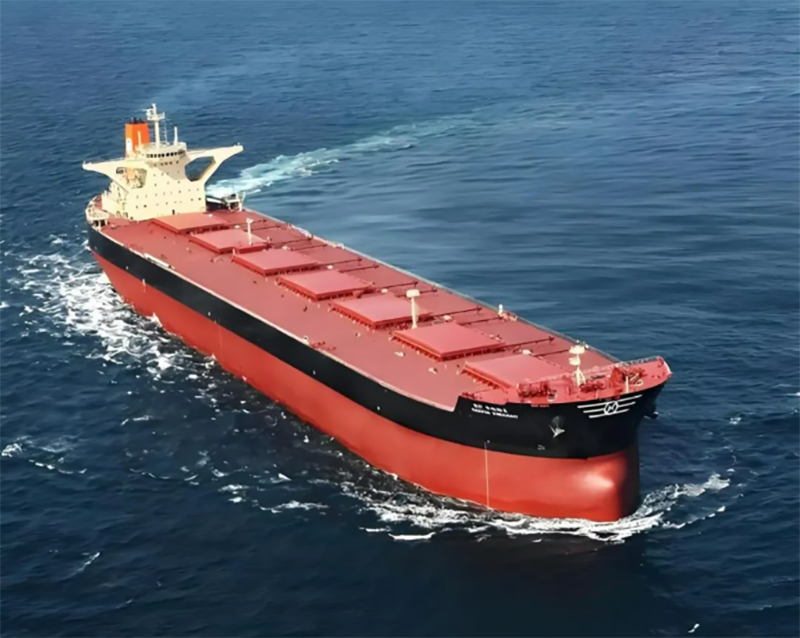
A cargo ship is a vessel primarily used for transporting cargo, but may also carry up to 12 passengers. Cargo ships can be categorized into general cargo ships, bulk carriers, timber ships, container ships, roll-on/roll-off (Ro-Ro) ships, barge carriers, and refrigerated ships, among others.
a. General Cargo VesselAlso known as a general cargo ship or a breakbulk carrier, this was the earliest type of cargo ship. It primarily transported various types of breakbulk cargo in boxes, bundles, packages, and barrels. Due to the development of container shipping, the volume of breakbulk cargo transport has gradually decreased, and it currently mainly engages in short-distance breakbulk cargo transport.
b. Bulk CarrierBulk carriers can be further divided into dry bulk carriers and liquid bulk carriers based on the form of cargo they transport.
① Dry Bulk CarrierThese are ships specifically designed to transport bulk cargoes such as grains, ores, coal, fertilizers, and cement. They are typically single-deck, stern-engine vessels with large hatches.
Based on the type of cargo transported and their structural design, dry bulk carriers can be further divided into:
• Bulk grain carriers (dedicated to transporting bulk grains)
• Coal carriers (dedicated to transporting coal)
• Ore carriers (dedicated to transporting ores)
• Self-unloading bulk carriers with self-unloading systems
② Liquid Bulk CarrierThese are ships specifically designed to transport liquid cargoes such as petroleum, including oil tankers, liquid chemical tankers, and liquefied gas carriers.
• Oil Tanker
This refers to a vessel specifically designed for transporting crude oil or refined petroleum products. Oil tankers are typically single-deck, stern-engine vessels. Because loading and unloading are done via pipelines, there are no cargo handling equipment on deck, nor are there large hatches. Instead, numerous pipe systems and valves are installed, along with cylindrical oil and gas expansion hatches. To ensure crew safety, a pedestrian bridge is built between the forecastle and aft deck, or an internal longitudinal passageway is provided below deck. Currently, oil tankers are required to have double hulls and dedicated ballast tanks to prevent pollution of waterways.
• Liquid Chemical Tanker
This refers to a vessel specifically designed for transporting bulk liquid chemicals. Its external shape and internal structure are similar to oil tankers. Since the liquids carried are mostly toxic, flammable, and highly corrosive substances, and come in many varieties, the liquid cargo tanks are smaller and have double bottoms to facilitate loading and prevent leaks. To facilitate cleaning and enhance the corrosion resistance of the liquid cargo tanks, some vessels use stainless steel for some or all of their liquid cargo tanks.
• Liquefied Gas Tanker
A liquefied gas tanker is a vessel specifically designed for transporting liquefied petroleum gas (LPG), liquefied natural gas (LNG), and liquefied chemical gas (LCG). These three types of liquefied gases are gases at normal temperature and pressure, but are liquefied under cryogenic and pressurized conditions before being transported. Liquefied gas tankers have a double-hull structure, an aft engine configuration, and spherical or cylindrical pressure vessels for cargo holds. Isolation compartments separate the cargo holds from non-cargo compartments. In addition to independent pumps, piping systems, and fire suppression systems for each cargo tank, liquefied gas tankers are equipped with remote control devices for controlling valves and pumps in various piping systems, as well as measuring instruments and monitoring devices to determine the liquid level, pressure, and temperature in the cargo tanks and monitor the operation of various equipment.
c. Timber CarrierThis refers to a vessel specifically designed for transporting timber, with a similar hull shape to a bulk carrier. Due to timber's low density and large volume, some of it needs to be loaded onto the deck; therefore, supports are installed on both sides of the deck to protect the timber.
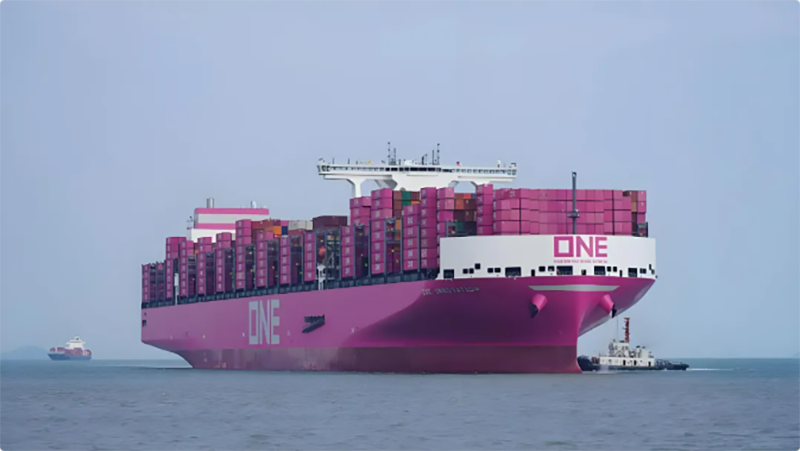
d. Container ShipThis refers to a vessel primarily designed for transporting containerized cargo. Cargo is pre-loaded into containers, which are then loaded onto the ship. The advantages of this mode of transport include high loading and unloading efficiency, reduced labor intensity, reduced cargo damage and loss, and ease of multimodal transport. Currently, container transport is developing rapidly and has become a major mode of transport for general cargo.
 e. Ro/Ro (Ro-Ro) ship
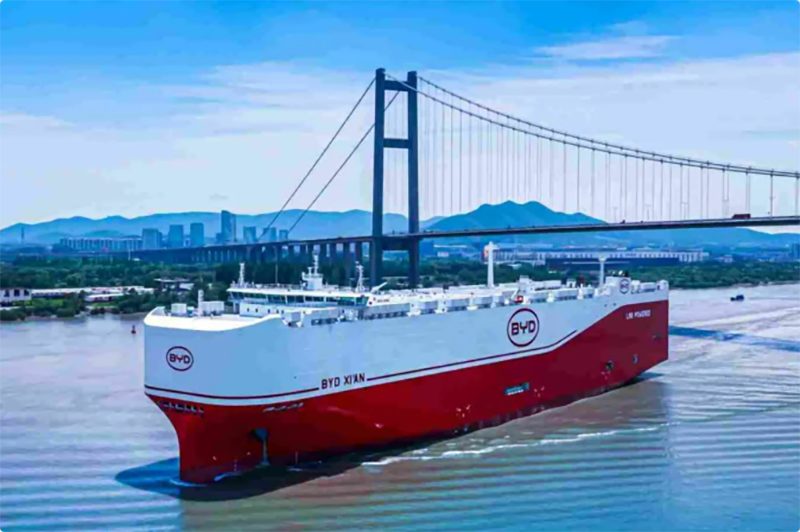
Ro/Ro (Ro-Ro) ship is a type of vessel that uses horizontal loading and unloading methods. It primarily transports automobiles and containers. During loading and unloading, ramps are placed on the dock at the stern, sides, or bow. Cars or trailers drive on and off the ramps to load and unload cargo; hence, Ro/Ro ships are also known as drive-on/drive-off ships or roll-on/roll-off ships.
 f. Barge Carrier
Also known as a mother ship, it loads cargo into smaller barges of the same size, which are then loaded onto the mother ship for transport.
g. Refrigerator ShipA specialized vessel for transporting perishable goods such as meat, fish, vegetables, and fruits. Its structure is similar to that of a general cargo ship, but its cargo hatches are smaller, the cargo holds are well-insulated, and it is equipped with high-capacity refrigeration units. Due to limitations in cargo volume, refrigerated ships are generally under 10,000 tons.
Special purpose vessels
1. Harbor vesselsThese include tugboats, fireboats, supply vessels, pilot boats, and transport vessels.
a. Tug BoatTug boats are relatively small in size but possess high power, strength, stability, and maneuverability. They are primarily used to assist other vessels in port maneuvering. High-powered tugboats can also be used for towing at sea.
b. Fire BoatFire boats are workboats specifically designed for extinguishing fires on ships within the port or in nearby buildings on docks. They are equipped with multiple fire monitors for spraying foam or high-pressure water jets, and some also have lifting platforms for extinguishing fires at heights.
c. Supply BoatSupply boats are specialized vessels used in ports to supply fresh water (water tankers), fuel oil (oil tankers), and supplies to transport ships.
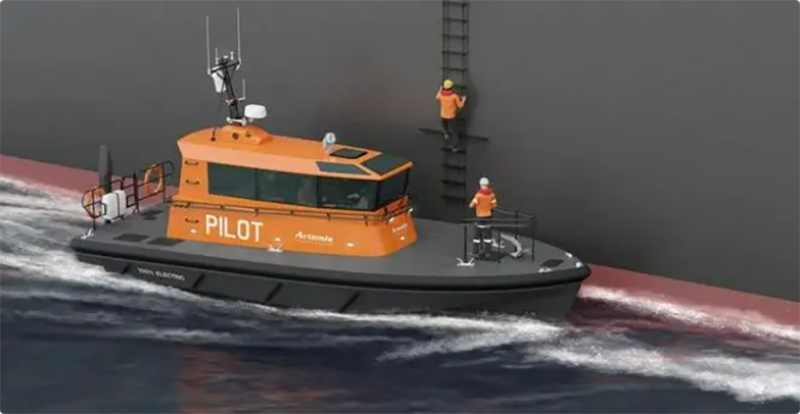
d. Pilot BoatPilot boats are vessels specifically designed to transport pilots to and from the ship for pilotage. They are painted in distinctive colors and display pilotage markings.
 e. Launch boat
A small boat used to transport crew members, staff, etc.
2. Engineering VesselsThese include dredgers, crane vessels, salvage vessels, maritime rescue vessels, icebreakers, and cable-laying vessels.
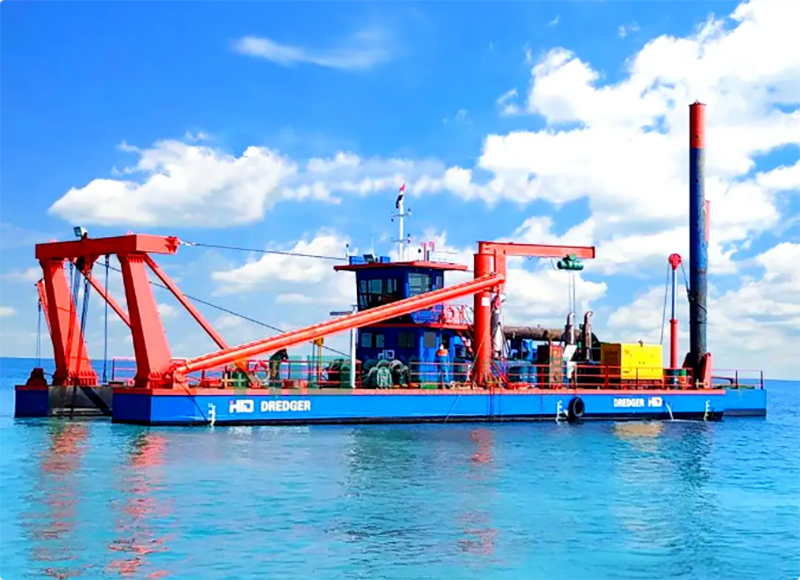
a. DredgerThese are engineering vessels used for dredging waterways, deepening berths, or excavating canals. They can be classified into several types according to their dredging equipment, such as trailing suction hopper, cutter suction hopper, grab bucket, and chain bucket hopper.
 b. Floating Crane
A specialized engineering vessel used for lifting, also called a floating crane. Most are non-self-propelled and moved by tugboats. The lifting capacity of a floating crane ranges from tens to hundreds of tons. Large floating cranes can lift thousands of tons.
c. Salvage ShipA specialized engineering vessel used for salvaging sunken ships or underwater debris. Salvage ships are equipped with cranes, winches, air compressors, and equipment for diving, welding, cutting, repair, and underwater positioning.
d. Rescue ShipA workboat specifically used for rescuing ships in distress. Its appearance is similar to a large tugboat, the hull is generally white, it has a relatively high speed, and it is equipped with various rescue equipment.
e. IcebreakerA workboat specifically used for breaking ice in shipping lanes and rescuing ships trapped in ice. The bow is sloped forward and specially reinforced. Large-capacity ballast tanks are located on both the bow and stern. When breaking ice, the bow is driven onto the ice layer, and then ballast water from the stern is pumped into the bow ballast tank. The ice is then crushed by gravity or by the ship's lateral swaying.
f. Cable ShipThis is a specialized vessel for laying submarine cables. It can also serve as a cable repair vessel. Its bow has a unique shape and is equipped with several large-diameter cable guide pulleys.
Scientific research vessel
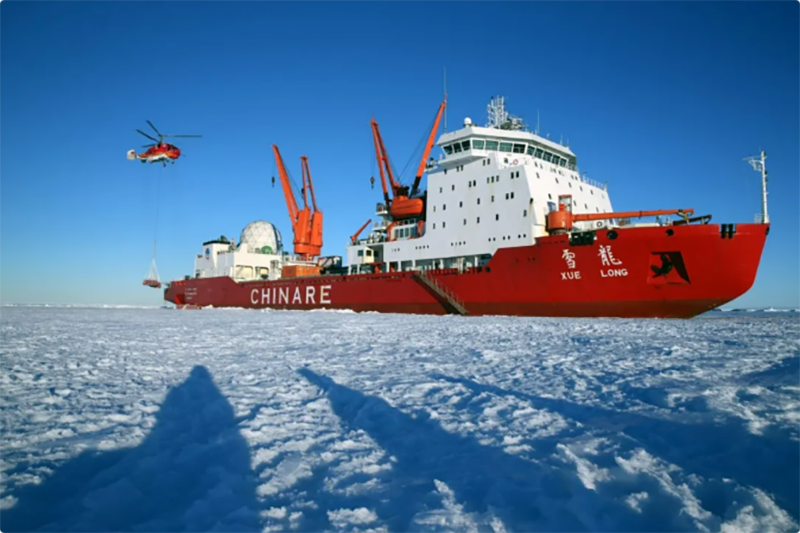
These vessels are used for marine hydrological, meteorological, geological, and biological research and exploration. They have good seakeeping performance, complete cabin living facilities, and long range.
Fishing boat
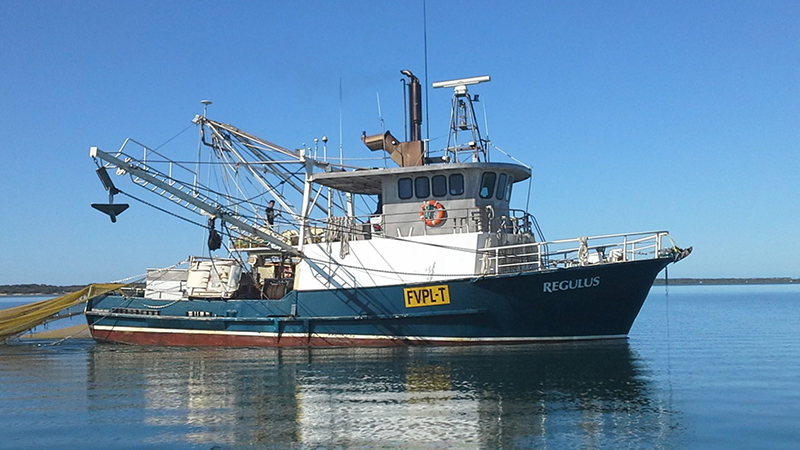
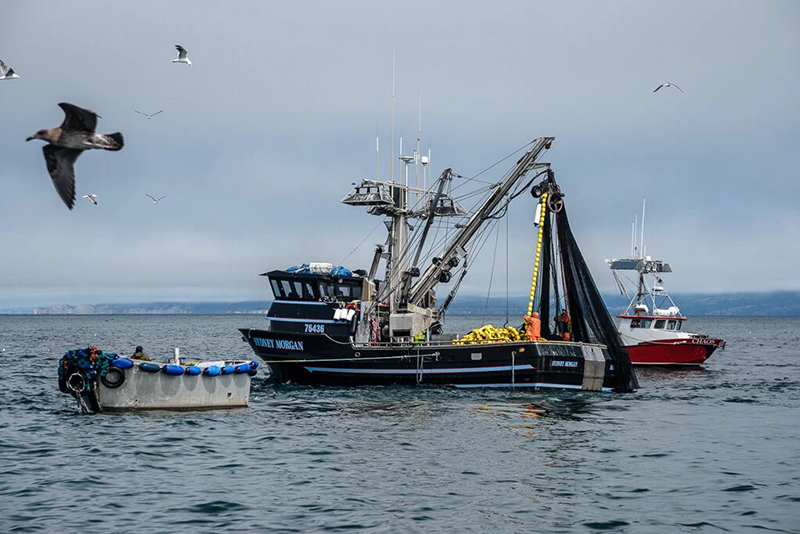
This refers to vessels engaged in fishing and auxiliary fishing activities, categorized by their operational methods into trawlers, purse seine vessels, driftnet vessels, longline fishing vessels, whaling vessels, and fish processing vessels.
In addition to these special-purpose vessels, there are also specialized vessels such as buoy vessels, drilling vessels, oil spill recovery vessels, garbage vessels, and piling vessels.