The various faults arising from the control systems of high-power
marine diesel engines not only present diverse symptoms but also have complex causes. Therefore, only those with extensive experience in the control system, a thorough understanding of the controlled object—the diesel engine—can quickly diagnose and resolve these faults.
For each fault in the control system, careful observation and analysis of the symptoms are essential for accurate diagnosis. Appropriate measures must then be taken to ultimately eliminate the fault and restore the control system to normal operation. In practical use, various faults in diesel engine control systems are inevitable and common. The following is a summary and analysis of the most common and significant faults in marine diesel engine control systems for reference:
A. When the diesel engine is started, it has reached the ignition speed, but it cannot ignite and run.
For compression-ignition internal combustion engines, the three essential elements for starting are temperature, fuel, and air. The starting speed indirectly represents the temperature inside the cylinder. If the diesel engine reaches the ignition speed upon starting, it indicates that the fuel's ignition point temperature has been reached in the cylinder. At this point, ignition will occur as long as well-atomized fuel is injected. Failure to ignite is mainly due to the following reasons:
1) Even if the cylinder reaches its ignition temperature, without fuel injection, the engine will not ignite.
2) Generally, the cylinder air supply is not the problem; there are many factors that prevent fuel injection.
For example, the fuel injection pump rack may be at a relatively high filler position, but if the fuel line is not open, fuel cannot be injected.
3) If fuel is injected into the cylinder, but atomization is poor (e.g., a damaged fuel nozzle), even with a large injection volume, it will not ignite. This is due to insufficient contact between fuel and oxygen.
4) The fuel injection pump is injecting fuel into the cylinder, and atomization is good, but if the amount of fuel injected into the cylinder is too small, it will not ignite.
5) If the fuel injection pump rack is not moving or the rack moves very little during fuel injection, it will also cause the engine to not ignite. This situation is often caused by a loose or slipping governor output rocker arm, or by improper installation and positioning of the output rocker arm;
6) Loose connections in the fuel regulating mechanism cause free play, resulting in insufficient fuel supply and failure to ignite;
7) Excessive total resistance in the fuel regulating mechanism causes the governor to compress the spring in the elastic rod when controlling fuel supply, preventing the fuel injection pump rack from moving and thus failing to supply fuel.
In short, when starting a diesel engine, it is essential to reach the starting speed and ensure that the fuel supply is within the required range to achieve a smooth start. Insufficient fuel will result in no ignition; excessive fuel can easily cause detonation, leading to a rough start and damage to the machine, especially the main bearings.
B. The diesel engine cannot be throttled (i.e., the load cannot be increased) while running.
During diesel engine operation, a situation may arise where the load (throttle) cannot be increased. This phenomenon is generally caused by the following factors:
1. Governor's Boost Pressure Fuel Limiting Function
The governor's boost pressure fuel limiting function is activated, preventing the throttle (load) from increasing. The boost pressure limiting characteristic curve needs adjustment, usually performed by a professional technician from the governor company. Only technicians familiar with the governor's structure should perform this operation.
2. Governor Output Rocker Arm Installation and Fuel Injection Rod System Adjustment Issues
If the output rocker arm is improperly installed, even if the governor output shaft is at its maximum position, the fuel pump rack controlled by the rocker arm may not be at the maximum throttle position. In this case, the rocker arm's installation angle should be adjusted to meet the requirements.
3. Limitations During Governor Fueling
During governor fueling, the maximum throttle limit screw in the fuel injection rod system may obstruct throttle increase, causing the elastic rod to compress and the fuel pump rack to remain stationary. The fuel injection rod system and the maximum throttle limit screw need to be readjusted.
4. Loose Fuel Regulator
A loose fuel regulator or connecting pin can cause the fuel injection pump rack to stop moving when the governor accelerates. This looseness should be corrected to ensure accurate fuel injection/deceleration.
5. Damaged Fuel Injectors
Damaged fuel injectors result in poor atomization, affecting load increase and causing higher exhaust temperatures. The injectors need to be replaced to restore atomization.
6. Air in the Fuel System
Air in the fuel system reduces the amount of fuel injected into the cylinder, affecting load increase. The air in the fuel system should be removed to ensure adequate fuel supply.
7. Inadequate Control Signal
An inadequate control signal can also prevent throttle (load) increase. The control signal needs to be adjusted to meet requirements.
C. Problems with Diesel Engines Unable to Stop While Running
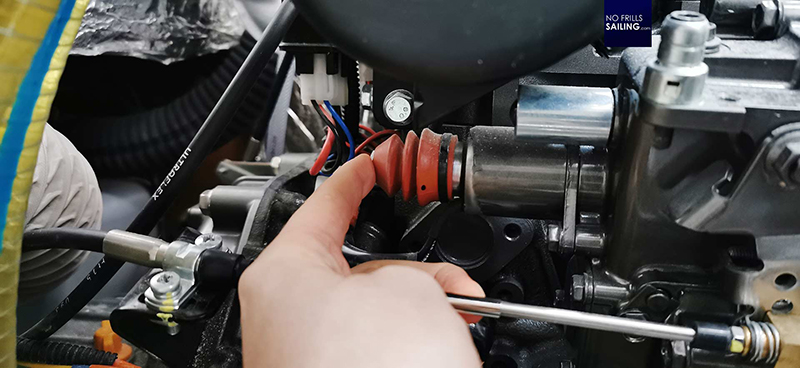
The inability to stop a diesel engine while running essentially means the inability to stop the fuel injection pump's fuel supply. The main reasons include:
1. Inadequate Control Signal
When the control lever is in the stop position, a control signal is still being sent, causing the fuel injection pump to continue supplying fuel. The control signal needs to be adjusted to ensure it meets the stop requirements.
2. Improper Connection of the Fuel Regulator System
The stop signal is in place, but the fuel regulator system connection is not properly established, preventing the engine from stopping. For example, the governor output shaft may be at zero or the stop cylinder may be engaged, but the fuel injection pump rack rotation may not be within the initial fuel supply range. The system should be adjusted to ensure that the fuel injection pump rack rotation is less than the initial fuel supply range when stopping.
In short, the principle for the fuel regulator system connection is: "The throttle must be able to be increased and decreased effectively."
D. Diesel Engine Reversing ProblemDiesel engine reversing involves the reversing of the starting air distributor and the fuel camshaft. For example, when reversing from forward position, the following may occur:
During starting air distributor reversing, disc distributors rotate at a certain angle via air cylinders to achieve reversing; plunger distributors change the position of the forward/reverse starting cams via air cylinders. By changing the corresponding positions, the distributor reversing is achieved. Therefore, during reversing, if the distributor's reversing cylinder is not in position for forward or reverse signal air, the distributor will not be able to complete the reversing action. If the air distributor can revers correctly, but the fuel camshaft cannot revers correctly, the diesel engine will also fail to complete the reversing action smoothly. Therefore, for engines that only require fuel reversing, the diesel engine reversing action can only be completed after both the distributor and the fuel camshaft have successfully reversed.
E. The diesel engine can reverse direction, but cannot start after reversing.This situation typically occurs during ship navigation, when transitioning from forward to reverse. For example, a fully loaded ship traveling at full speed needs to reverse. First, a reverse reversing maneuver is performed. After completing the reverse reversing maneuver, the reverse start is then attempted. Even with the fuel cut off, the propeller continues to rotate in the forward direction due to the ship's inertia, generating torque called counter-torque; the torque generated by the main engine rotating in reverse is called forward torque. For a reverse start to be achieved, the main engine can only reverse when the ship's speed decreases to a point where the propeller's counter-torque is less than the forward torque (i.e., during startup, the forward torque generated by compressed air is greater than the counter-torque).
It should be noted that the counter-torque generated by the ship's inertia is closely related to the ship's load condition. If the ship is fully loaded, the counter-torque will increase significantly. Therefore, after reversing, if the forward torque generated by compressed air is less than the ship's inertial counter-torque, a reverse start cannot be achieved.
F. False alarms during diesel engine operation;
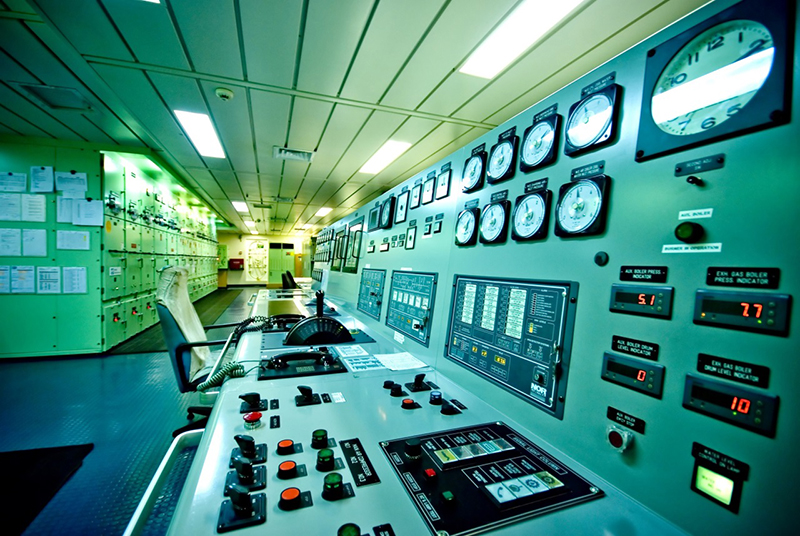
False alarms frequently occur during diesel engine operation, especially regarding exhaust temperature and lubricating oil pressure. The main causes of false alarms are usually as follows: First, incorrect alarm settings can lead to false alarms; second, sensor malfunctions, i.e., problems with the measured signal, can trigger false alarms. For example, in high exhaust temperature alarms, a faulty thermocouple sensor can cause distorted exhaust temperature display and false high exhaust temperature alarms; third, faults in the alarm system wiring can also cause false alarms. Of course, other factors may also cause false alarms, but the above three are the most common. Alarm settings can be adjusted; faulty sensors need to be replaced; and wiring faults should be addressed promptly.
G. Faults in the main unit speed measurement system;
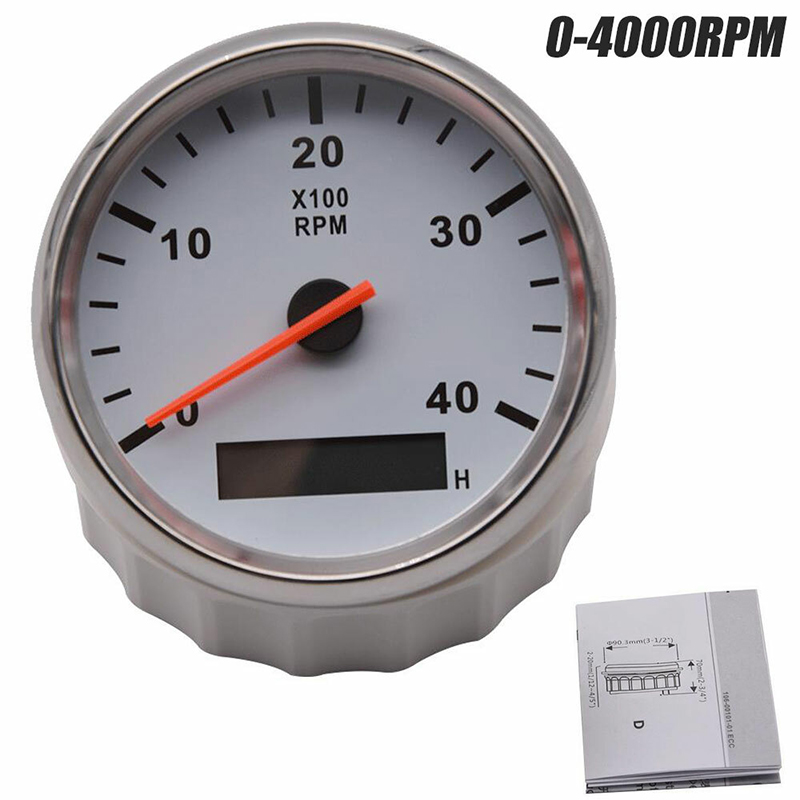
The main unit speed measurement system mainly includes main unit speed measurement and turbocharger speed measurement. Common symptoms of a fault in the speed measurement system include the main unit tachometer and turbocharger tachometer not moving or indicating inaccurate speed.
If the tachometer pointer does not move, first check if the tachometer input signal is present. If there is no input signal or the signal value does not meet requirements, the speed measuring device needs to be checked. After performing simulation tests, the sensor's operating status and installation clearance also need to be checked. If the installation clearance is off, it needs to be adjusted to the standard range.
At the same time, a comprehensive inspection of the entire speed measurement system's wiring is essential to confirm whether there are any loose or incorrect connections.
H. Inaccurate readings from secondary pressure and temperature instruments;Secondary pressure and temperature measurements refer to long-distance measurements using temperature and pressure sensors. Before installation, sensors must be calibrated to ensure the accuracy of the output signal. Currently, most of these sensors output signals are 4-20mA. If the secondary instrument readings are inaccurate, the following troubleshooting steps are required:
For temperature sensors, such as the PT100 sensor for measuring low temperatures, if the calibration result is normal, check if the installation conforms to specifications, especially the accuracy of the insertion depth. The insertion depth is typically required to be 2/3 of the pipe's inner diameter. If this is not met, adjustment is necessary. If the sensor, installation, and output signal are all normal, further check the temperature gauge's operating status. Additionally, if necessary, check the relevant wiring.
For pressure sensors, since they are active sensors, check if the power supply is stable, if the pressure is achieved, and if the output signal meets specifications. If all the above checks are normal, check the pressure gauge and wiring.
If the gauge has a zero-point adjustment function, it may be necessary to adjust it to zero.
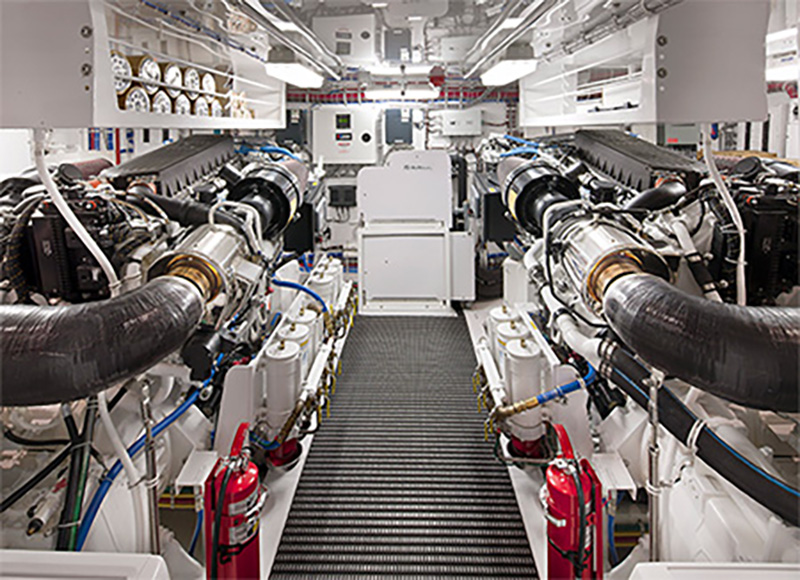
The above describes common faults and their troubleshooting methods in the control systems of marine medium- and low-speed diesel engines. Of course, other faults may occur during actual operation. However, by carefully observing the fault phenomena and conducting in-depth analysis, the cause of the fault can be identified, and corresponding measures can be taken to properly resolve the problem.