In the field of ships, the meaning of masts has been evolving. In ancient times, sailing ships were characterized by huge fanning sails, powered by wind, as a means of propulsion. The masts were supported by wooden supports called masts. The masts were as tall as the sails, strong and durable to withstand wind loads and ship movements as well as adverse weather conditions.
Slowly, these sailing ships went from the sea to the pages of history, and masts began to have a completely different meaning. Due to the development of technology and communications, these masts now have a different importance on almost all modern ocean-going ships.
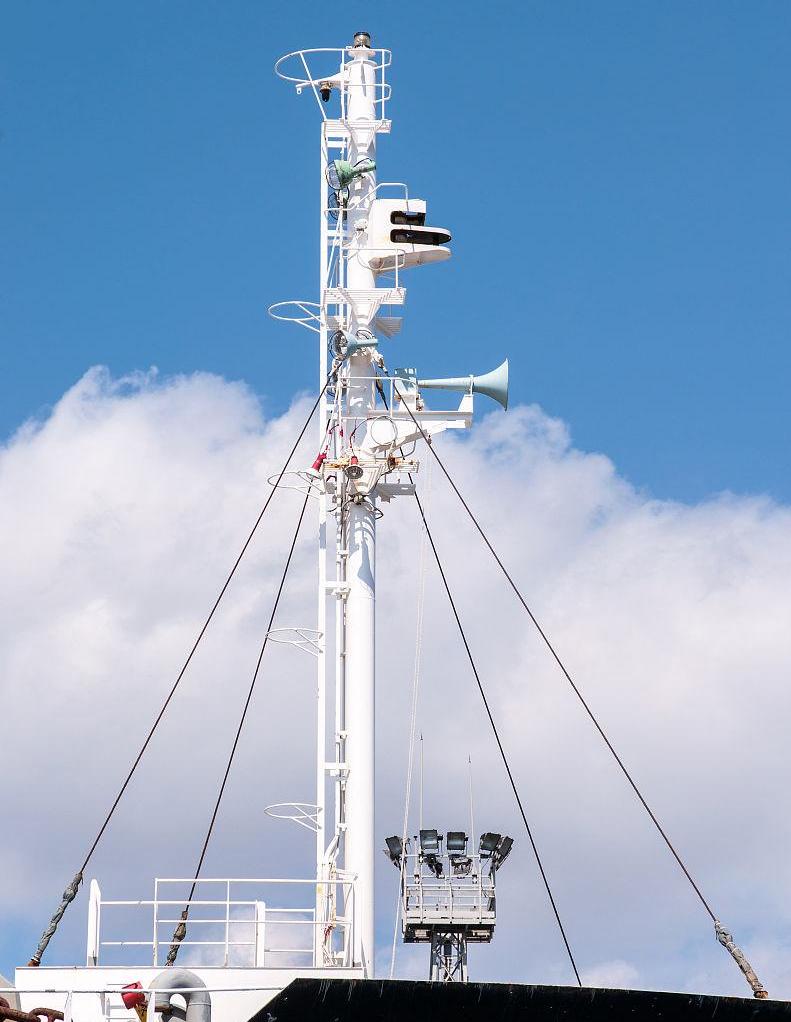
These masts now serve multiple purposes:
Act as light signals and beacons, as well as representatives of sound signals such as horns.
As radio transmission and telecommunication systems, used to capture radio signals and act as communication towers for ships
They are an inherent part of navigational devices, where radar can provide the precise real-time position of the ship and the geographical coordinates of nearby land or traffic within hundreds of nautical miles.
They also help defense ships in ultra-modern detection and search.
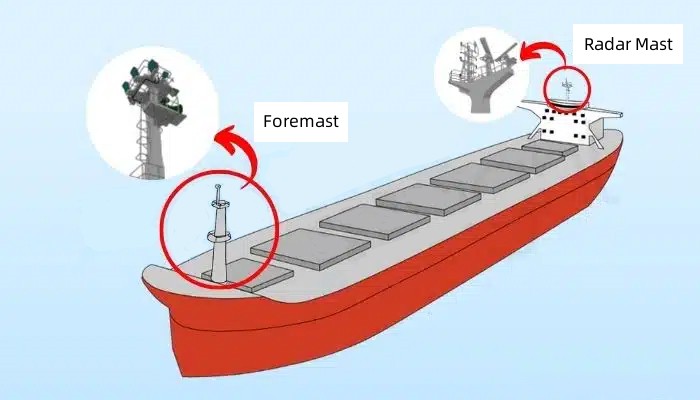
Masts have evolved from simple mechanical supports to complex electrical, electronic and communication installations to ensure safety and navigation while the ship is underway.
A detailed description of modern ship masts is beyond the scope of this article, but a brief explanation of the key and basic components of the design can be given.
A mast generally consists of the following components:
Truss structure: It is the main steel structure on which all the equipment is mounted. In defense ships, truss structures are larger and heavier. They usually have a central structure that is tubular, cylindrical or conical in shape depending on the size and complexity. They are mounted and fixed to the top deck above the superstructure/deckhouse of the ship, such as the bridge deck or the top of the wheelhouse. They also mount the main power supply and transmission lines. From the main steel structure, secondary branch structures extend. There can be one or more layers of such branches depending on the complexity of the system. Antennas, lights and sound systems are usually mounted on these branches.
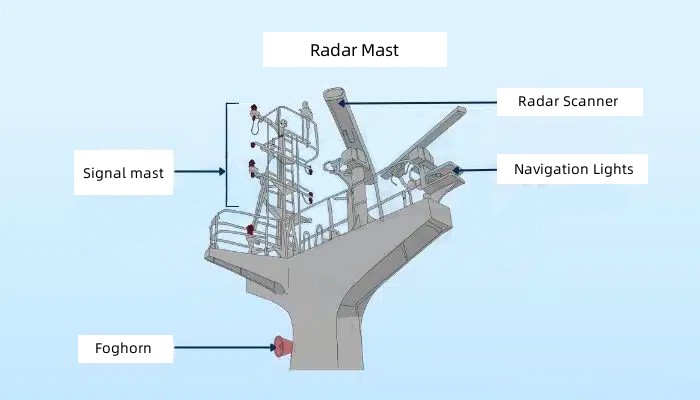
Antenna: The antenna is the most important part of any radio transmission system, which on one hand emits electrical signals or waves from the position and on the other hand receives signals from external sources. For all practical purposes, this antenna is usually located on these outward branches of the truss structure.
Radar: After the days of the compass, radar is now the primary source of navigation for all seagoing vessels. Radar transmits the ship's position signal electronically to the navigation bridge. Radar systems are usually located at the highest point of the ship. Advanced radars, such as Very High Frequency or VHF, are used in warships with extremely high detection capabilities. In most modern ships, radars are either X-band or S-band frequency radars. From a technical point of view, the radar system is electronically integrated with the ship's navigation and detection system, which consists of radio, charts, sonar and other specialized underwater systems, emergency systems (such as SART), satellite communications, and GPS units.
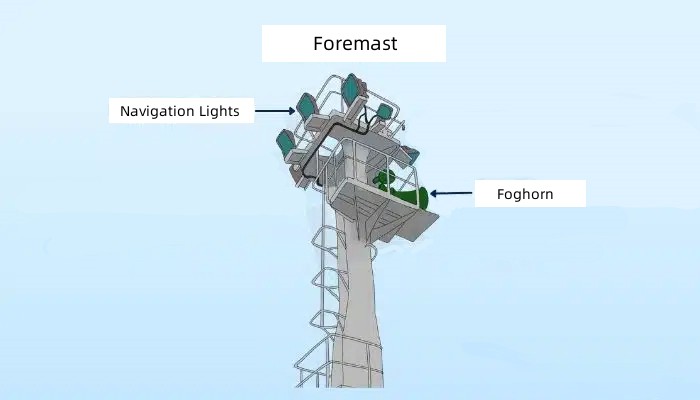
Cables and Power Lines: Inside the mast is a complex network of cables and power lines that power the various systems on the mast and carry electronic signals back and forth. Most of these lines are connected to the wheelhouse.
The design philosophy of the radar system usually considers the following aspects:
Strength and Durability: Since the truss structure is always exposed and subject to various weather phenomena as well as the movements caused by the ship, its structure must be strong. High-grade steel is usually used to build the truss structure. Aluminum and high-grade composite materials are also used in many designs. Before manufacturing and installation, a finite element analysis is usually performed on the structure.
Vibration: This is also a very important aspect, as the structural frequency of the expected loads and the electrical frequency of the high-voltage power supply need to be evaluated based on the natural frequency of the ship structure to avoid resonance. Nowadays, vibrations caused by eddy currents are also taken into account.
Fatigue: Since the mast structure is expected to last throughout the service life of the ship, fatigue strength is also another key aspect and its fatigue "life" needs to be checked when subjected to the upcoming loads.
Attachments and Connections: This is a very important part of the design process, as the overall structure is heavy, houses many systems and equipment, and is directly connected or welded to the deck. Therefore, every connection point is checked for connection to ensure that it can withstand all types of worst case loads without shaking at the end.
Check for local hot spot stress at joints, welds and intersections
Corrosion due to continuous exposure to outside weather.
Radars are also equipped with high-grade insulation systems to protect against lightning strikes, which are very common on the open sea, especially in bad weather. These insulation systems take care of all the critical systems within the radar mast and are connected to the ship's grounding system.
Wires and cables are also properly designed and have enough insulation to prevent burnout and short circuits, which can lead to large-scale fires on board during rainy seasons.
Radars are usually installed on board after the entire construction is completed and most of the electrical installations are also completed. From a design point of view, radars include outfitting. Most of the equipment/systems/devices on the mast are classified for reliability as per COLREG or LSS (Lights, Sounds and Signals) guidelines prescribed by classification societies and the International Maritime Organization.